Ever since nuclear
technology was developed, radiation has been used in popular media as
a sort of plot device—especially after the events of Hiroshima. And
yet, despite radiation's prevalence, more often than not it is
presented in an entirely inaccurate light. For decades, the public's
perception of all things nuclear has been shaped by fear and
misunderstanding—and this is reflected in popular culture's
portrayal of it.
Part of the problem
may lie in the government's rigid lockdown on nuclear information,
especially during the Cold War. Information lockdown was so severe
that even when scientists in the dawn of the Cold War were trying to
discover the effects of radiation, they weren't even allowed to use
the word 'plutonium' to inform their subjects about the nature of
their experiments. [1] If
subjects directly involved with radiological experiments couldn't
even be told of nuclear technology, how could the public have
possibly created an accurate view of the effects of radiation?
Indeed, one of the
few things that was known about nuclear technology was that it was
dangerous—and that it affected things at the atomic level.
Otherwise, the rest of the details are left up to imagination—and
once the popular perception of radiation was formed, it was
effectively set in stone.
 |
| Godzilla--the original |
Godzilla
was one of the first, and remains one of the more popular perceptions
of the supposed effects of radiation. Inspired
by the events surrounding the radiation of Japanese fishing boat
Lucky Dragon #5, Godzilla
is a fictional, sensationalized account of the potential effects of
radiation. In Godzilla,
the monster is the result of the sea being irradiated. In fact, the
opening scene of Godzilla
explicitly mirrors the events of Lucky Dragon #5. [2]
 |
| The Incredible Hulk, irradiated hero |
This
set the stereotype for countless future media
depictions of the effects of radiation; in the eyes of fiction,
radiation can create mutants, monsters, and even heroes. Movies such
as Them! furthered the
stereotype of the mutant monster, while comic books would later use
the idea of radiological mutation to create superheroes. Captain
America, Spiderman, and the Incredible Hulk are merely three examples
of superheroes who received their powers through radiation.
 |
| Three Mile Island |
So
prevalent were these media depictions of the effects of radiation
that they began to affect how the general public saw reality. This
phenomenon can be seen in the aftermath of Three Mile Island, a
nuclear facility that had a minor meltdown in 1979. According to
interviews of those who were present nearby when the incident
occurred, reactions ranged from belief that there was going to be an
explosion like what happened to Hiroshima, to comparing
it to Star Trek, War of the Worlds, and
The China Syndrome
(which, coincidentally, had come out mere days before). [3] Despite the
inaccuracy of some of these reactions, they have become almost fact.
Three Mile Island is still widely considered a disaster by the
public... despite the fact that it caused little to no lasting
damage. Both of my parents worked on cleanup at Three Mile Island,
and according to them the incident at Three Mile Island was actually
one of the best case scenarios.
Even
though more information about nuclear energy has become available in
recent years, enough to the point that the effects of radiation on
the body are easily searched on Google, the common perception of
radiation leading to mutation is still widely held, especially in
various forms of media. The Hulk is still created by gamma radiation,
monsters are still created through radiological mutation, and through
it all there is rarely any mention of radiation poisoning.
Part
of this may be due to the simple fact that fantastical mutations are
infinitely more entertaining than cancer caused by radiation. People
like mutant monsters, and as long as nuclear energy is mildly
villified, monstrous mutation will remain a staple of media.
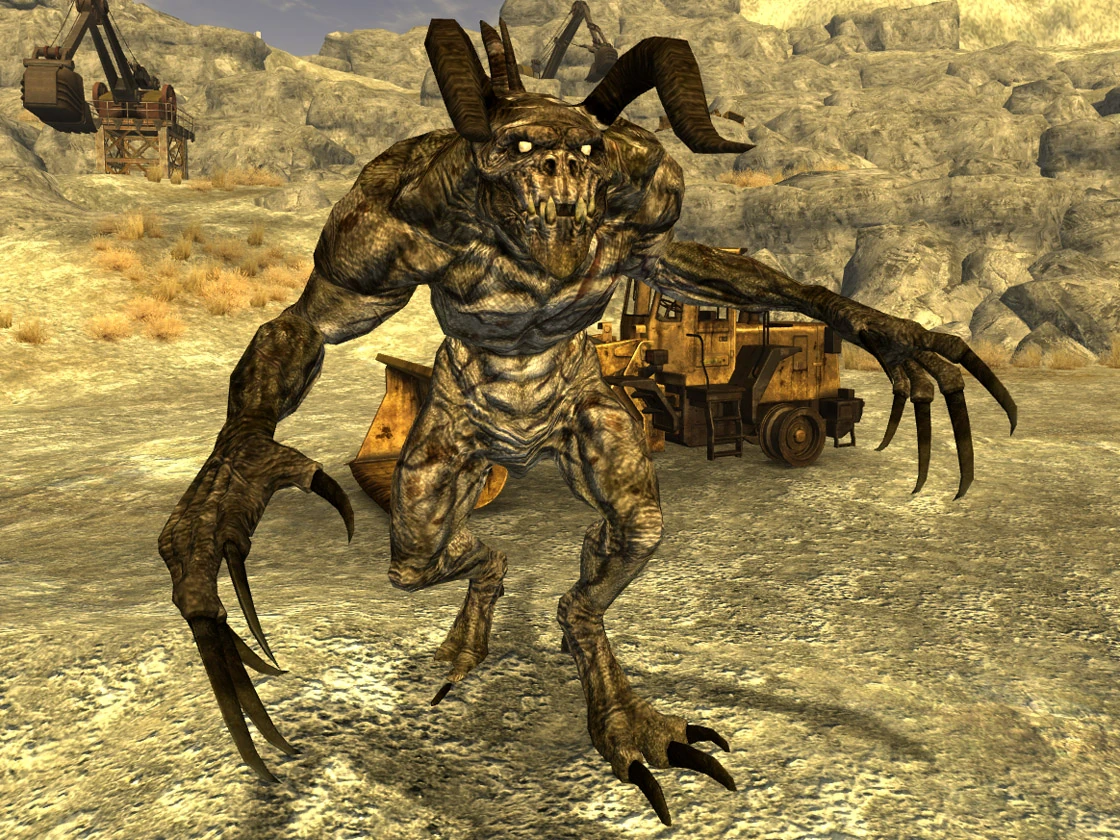 |
| Deathclaw mutant from Fallout: New Vegas |
And
yet not all portrayals of radiation are so inaccurate; one video game
series, the Fallout
series by Bethesda, seeks to combine reality with fantasy. While
there are mutants supposedly caused by radiation (two headed cows,
zombie-like “ghouls” in a callback to the Night of the
Living Dead movies, giant
scorpions and mole rats, and Deathclaws—giant, vicious, bipedal
mutant lizards) there is also an aspect of realistic radiation
included. If you walk into irradiated water (or drink irradiated
water), or if you walk through an area that is especially irradiated,
you yourself gain some radiation which can then lead to radiation
sickness and, eventually, death.
So,
then, there is hope for a movement towards more realistic portrayals
of radiation in media. And yet, personally, I feel as if we may never
be completely free of the story of irradiated mutants. It's too good
of a storyline, too entertaining—and radiation has been used for so
long as a sort of scientific stand-in
for magic that it will likely continue to be used as such until
something else, something new and mysterious comes along to take its
place. And, in the end, is that such a bad thing? After all, it's all
in good fun.
Further Readings:
Radiation as Culture Talisman - Robert Jacobs

No comments:
Post a Comment